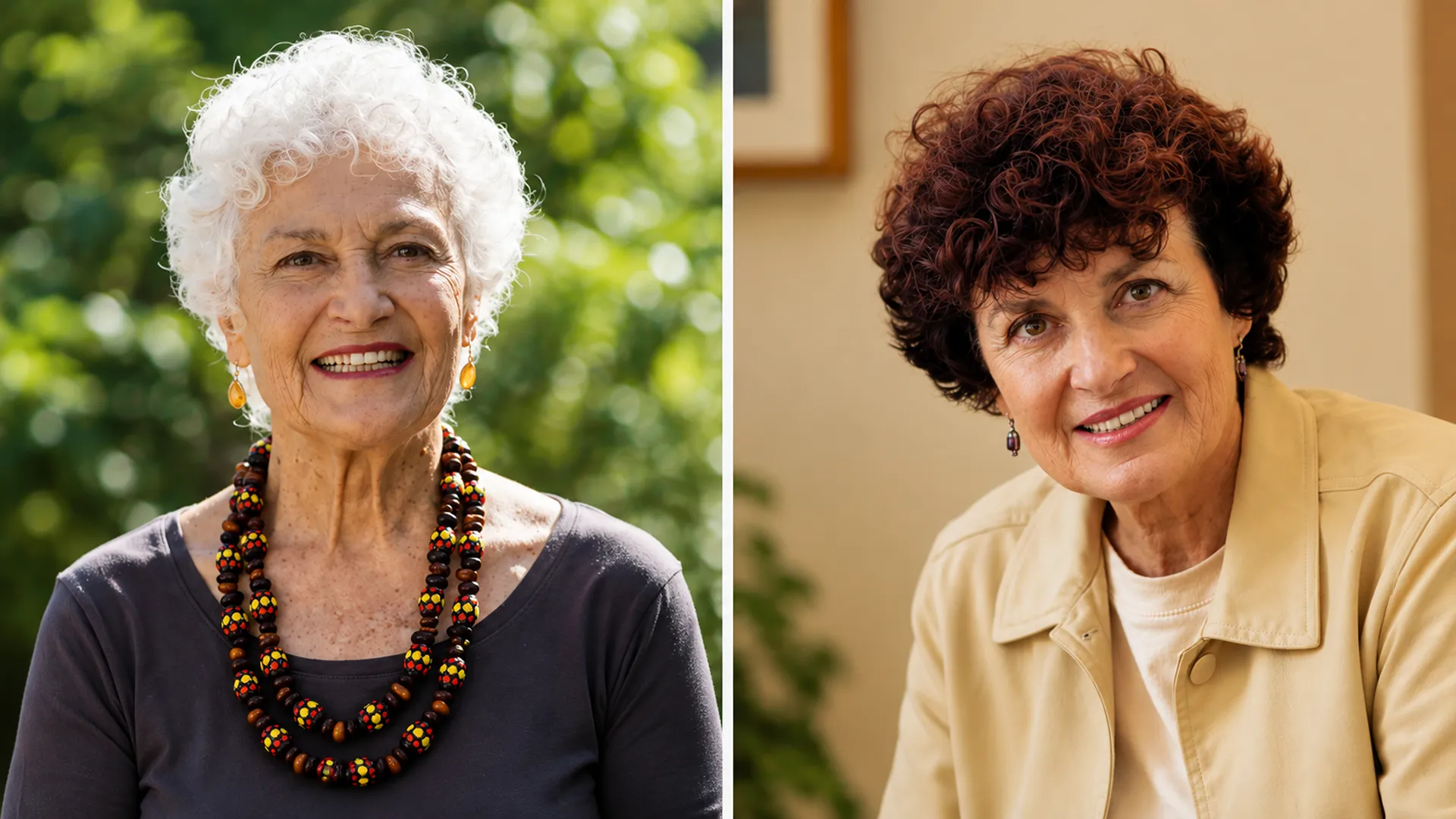
Fiona Stanley proved that folate deficiency in pregnancy raises the risk of birth defects like spina bifida. That’s the short version. The longer version: this Australian epidemiologist changed pregnancy advice worldwide, and her name now sits on Perth’s newest major hospital, even though she never worked there as a doctor. The hospital honours the research. Not a clinical career.
The Person Behind the Name
A Childhood Shaped by Science
Stanley grew up around science almost by accident. Her father was a virologist, and through his work she crossed paths with Jonas Salk, the man behind the polio vaccine. She read about scientists for fun as a kid, and Marie Curie stuck with her more than most. Medicine wasn’t exactly the expected path, either.
Her family were “pure scientists,” and nobody was steering her toward a medical degree specifically. If anything, Curie’s story is what pulled her that way. She studied medicine at the University of Western Australia, graduating in 1970.
The Clinic Placement That Changed Everything
Here’s where things actually shifted. During a student placement at the Aboriginal Clinic in East Perth, she saw poor health outcomes among the patients, especially the kids, and it stuck with her long after the placement ended. Treating patients one at a time stopped feeling like enough.
She wanted to know why entire populations were getting sick in the first place. That single placement is probably the biggest reason her career bent toward public health and epidemiology instead of general practice. Worth remembering that this wasn’t some grand career plan. It was a placement she could easily have forgotten about.
Building a Career in Public Health
After graduating, she went to the University of London for a Master of Science in Social Medicine, picking up proper training in epidemiology and biostatistics along the way.
Back in Perth through the late 1970s and 1980s, she worked as a senior medical officer for child health with the WA health department, then as deputy director of a national epidemiology research unit at UWA. None of it made headlines. It was the groundwork.
The Discoveries That Made Her Famous, Explained Simply
The Folate–Spina Bifida Link
Most people who know her name know her for this one. Stanley helped confirm that women who don’t get enough folate before and during early pregnancy face a higher risk of having a baby with a neural tube defect, spina bifida being the best-known example, where the spinal cord doesn’t form properly.
It didn’t stay in a journal. It became the basis for pregnancy advice you’ve probably heard yourself: take folate before you try to conceive. Australia and several other countries went further and started fortifying staple foods, bread flour especially, with folic acid. Most people taking that advice today have no idea whose research it traces back to. That’s the part I find genuinely underrated about her career: the discovery is invisible now precisely because it worked.
Rethinking the Causes of Cerebral Palsy
For years the assumption was that cerebral palsy mostly came from complications during birth, a hard delivery, a lack of oxygen. Stanley’s research complicated that story. By linking obstetric and child health records over long stretches of time, she showed most cases actually trace back much earlier, to early pregnancy, rather than to labour itself. That changed where clinicians looked when trying to prevent it.
In plain terms: enough folate in pregnancy helps prevent spina bifida. Most cerebral palsy starts earlier in pregnancy than doctors used to think. Two findings, one shared effect on how we approach preventing childhood disability.
The Scale of Her Impact
Easy to state these as facts and move on. The numbers are worth sitting with for a second, though. Folate promotion campaigns in Australia cut neural tube defect cases by roughly 30% even before fortification became mandatory.
Once mandatory fortification of flour started in 2009, the reductions went further, and the gap between Aboriginal and non-Aboriginal birth outcomes narrowed a lot by the early 2010s. A serious, preventable birth condition, happening less, year after year, off the back of research she helped establish.
She built an institution too, from nothing. As founding director of what’s now The Kids Research Institute Australia, formerly the Telethon Institute for Child Health Research, she grew it from a 1990 startup into an organisation with more than 500 staff and students by the time she stepped down in 2011.
Over 300 published papers across her career. That’s the kind of output that keeps a discovery shaping policy decades later, and honestly it’s rare to see both the science and the institution-building come from the same person.
Why Perth’s Newest Major Hospital Carries Her Name
Fiona Stanley Hospital opened in 2014, named directly after her. Not a vague nod, either. It recognised specific work: her contribution to child and maternal health research and her role building Aboriginal health research in Western Australia.
Here’s the bit that confuses people. She never worked as a treating doctor at the hospital carrying her name. It’s honorific, not clinical. If you’re searching for her hoping to find “Dr. Stanley’s ward,” that’s not how it works. Closer to a university naming a building after a graduate who did something remarkable. The recognition is real. It’s just not about day-to-day presence on the wards.
Fiona Stanley’s Legacy Today
She hasn’t faded into quiet retirement. Stanley is still Patron of The Kids Research Institute Australia, the organisation she founded, and stays active as a mentor and Chief Investigator on research grants. She also holds a role as Distinguished Research Professor in the School of Paediatrics and Child Health at UWA, so she’s tied to both the research and teaching side of the field, still.
She’s stayed a public voice on child health and Aboriginal health policy too, the kind of person advisory committees ask to weigh in when these issues come up publicly. Not a historical figure, in other words. A legacy that’s still being written.
Frequently Asked Questions
Is Fiona Stanley still alive?
Yes. As of 2026 she’s alive and still active in an advisory and mentoring capacity, including as Patron of The Kids Research Institute Australia.
How old is Fiona Stanley?
Born in 1946. That puts her around 79 to 80, depending on when you’re reading this.
What is Fiona Stanley best known for?
Confirming the link between folate deficiency in pregnancy and neural tube defects like spina bifida, and research that reshaped how doctors understand what causes cerebral palsy.
Did Fiona Stanley work at Fiona Stanley Hospital?
No. It opened in 2014, named in her honour for her research career. She wasn’t a treating clinician there.
What awards has Fiona Stanley received?
Companion of the Order of Australia, Australian of the Year in 2003, National Living Treasure status, Fellowship of the Australian Academy of Science.
Why Her Work Still Matters
A kid who loved reading about scientists. A clinical placement that redirected her whole career. Research that’s quietly protected thousands of babies from preventable birth defects. The hospital named after her fits, not as a symbolic gesture but as a marker for a career that’s still shaping child health policy today.